Pablo Sánchez interviews Sheffield Postdoctoral researcher Alice D. Bridges about her work with bumblebees. During the conversation, we talk about how bumblebees learn to solve puzzles and how these little buzzers with tiny brains share their knowledge for the prosperity of the colony.
Gerfried Ambrosch talks with Zilka Joseph about her latest book: Sweet Malida. The interview covers the author’s views and influences, the inspirations for her book and the experiences of a Bene Israel woman.
This article is written out of concern over the decision of the Kurdistan workers’ party (PKK) to disarm—a move that, while framed as a step toward peace, echoes the tragic setback of Mulla Mustafa Barzani in 1974-5. History has shown that when Kurdish groups lay down their arms without firm guarantees, they face betrayal and defeat. This decision, made in the absence of binding assurances, is deeply troubling. The Kurdish experience is marked by repeat losses when disarmament occurs without legal, political, and international protections. My aim is to highlight that hope alone cannot rewrite history; without concrete guarantees, disarmament can be devastating.Continue reading “The PKK’s Disarmament: A Historical Echo and a Questioned Decision”→
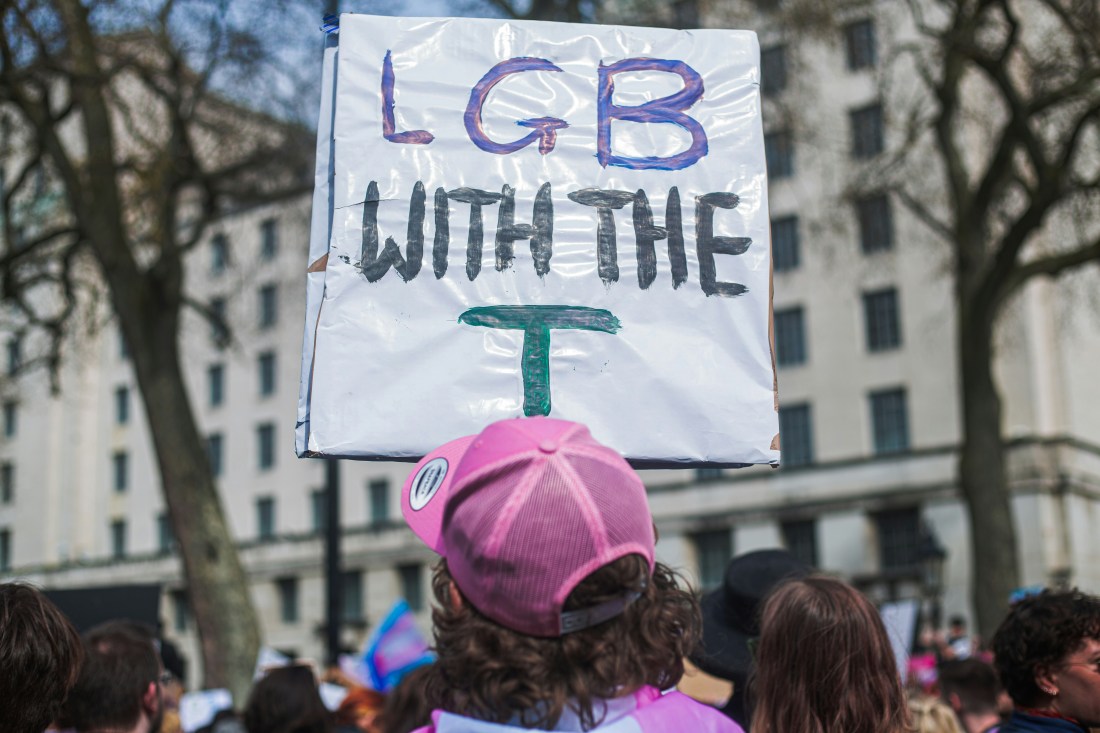
This article examines how polarized debates on gender erode the space for pluralistic democratic dialogue. As the pressure to adopt unequivocal moral positions grows, the ability to engage across difference weakens. Rather than fostering mutual understanding, public discourse often collapses into moral alignment, leaving little room for nuance, or the deliberative practices essential to democratic life.Continue reading “The gender debate and the collapse of dialogue: on authority, recognition, and the limits of dissent”→
My essay is about visiting the Kurdistan Region of Iraq in March 2023 after an absence of over a decade, exploring the difficulty of shopping for a pair of shoes, visiting my childhood home, and pondering on the question of history and childhood adversities. Within the story, I show the evolving dynamics of my relationship with my family, some aspects of market economics in the region, snippets of the Kurdish exodus in 1991, and attachment to homeland.Continue reading “In search of a pair of shoes”→
Dear Western people. Stop strictly framing the experience of queer Palestinians to death, violence, and homophobia (I use queer as an umbrella term to refer to the broader LGBTQ group). Queer Palestinians deserve a representation beyond colonization, occupation, apartheid, human rights violations, and as of late, genocide. These things we experience alongside all Palestinians, regardless of their queerness. Queer Palestinians are worthy of a representation that humanizes them, and their communities, and focuses on the common joys and struggles that they also share with queer communities worldwide.Continue reading “Dear western world: It is time you relearn queer Palestine”→
Bluesky, a decentralized (meaning it is not controlled by a single central authority, with governance and data distributed among multiple nodes) social media platform which gained many users in recent months, including scientists, promises algorithmic freedom to users, who can choose what content they wish to see (1). However, as explained below, Bluesky risks perpetuating echo chambers and exacerbating polarization—issues it seeks to resolve.
Social media: stop creating division, star creating communication across divergent opinions. Photo @Pinterest
Bluesky’s decentralized model places moderation largely in the hands of third-party labelers (i.e., independent individuals or organizations who flag or categorize social media content) and community-specific algorithms (i.e., automated systems shaped or developed by specific communities to reflect their shared norms, interests, and moderation standards) (1). While the decentralized model allows users to shape and curate their online experience – often by filtering out content that may perceive as offensive or enraging – this flexibility risks promoting the existence of isolated, like-minded groups of people on social media, because each community can maintain and reinforce its own norms (2). Such echo chambers exacerbate polarization, reduce exposure to diverse viewpoints, and hinder constructive dialogue. Furthermore, unclear content moderation policies (such as those currently used by Bluesky) that aim to counter misinformation often rely on censorship, which does not address the root causes of misinformation, deepening mistrust and further promoting echo chambers (3).
Social media platforms should design algorithms that encourage diverse interactions and promote collaboration across ideological divides — an essential step in addressing global challenges, mitigating misinformation, and strengthening public discourse. The solution does not lie in creating new platforms that merely rearrange existing problems but in fundamentally redesigning digital spaces. This involves reducing polarization by exposing users to a variety of perspectives, even those that challenge their beliefs, while empowering them to critically engage with information through strategies that promote the skills to understand, evaluate, and use information effectively.
Federico Germani and Giovanni Spitale
References:
Kleppmann, M., et al. “Bluesky and the AT Protocol: Usable Decentralized Social Media”, ArXiv (preprint), 2024.
Huang, T., “Decentralized Social Networks and the Future of Free Speech Online”, ArXiv (preprint), 2024.
Germani F., et al. “Ethical Considerations in Infodemic Management: Systematic Scoping Review”, JMIR Infodemiology, 2024.
Received: 07.02.25, Ready: 17.02.24,. Editor: Simone Redaelli and Robert Ganley
Since time immemorial, people have been using songs to protest injustices and co-ordinate protest movements. Conversations with musicians who have performed protest songs and an examination of the ideas of Plato, Arthur Schopenhauer, Sigmund Freud, Donald Winnicott, Anthony Storr and Ernest Becker on music’s cultural and psychological impact provide insight into why music is a unique and important site of protest. Protest may even be inherent in the act of musical creation.Continue reading “Can music change the world?”→
Since its emergence, the alt-right has been examined in different ways. Instead of following conventional theoretical approaches that analyse it as a social movement or set of ideological beliefs, this article takes a different turn. By reinterpreting the concept of the multitude elaborated by Michael Hardt and Antonio Negri, this article illuminates the racist, xenophobic, and sexist fantasies that have given shape to the alt-right and enabled it to acquire a life of its own. This life is devoted to the consolidation of white, Western, and masculine supremacy.Continue reading “The alt-right multitude and its racist, xenophobic, and sexist fantasies”→
My narrative arises from personal experiences, depicting the sense of insecurity under Turkish drones. I illustrate numerous instances where the Turkish government’s actions instilled panic and caused civilian casualties in Iraq and Syrian Kurdistan, often rationalized as their fight against terrorism. This pattern reveals Turkey’s agenda to eliminate the Kurdish population, a part of a long history marked by blatant crimes against the Kurds. I request that everyone vociferously oppose Turkey’s aggressive actions. The strength of the Kurds is crucial; if they are destroyed, extremist groups such as ISIS gain power, endangering global safety. To safeguard the world, you must ensure the safety of the Kurds.Continue reading “Turkey Links Terrorism to Kurdish Ethnic Cleansing”→